
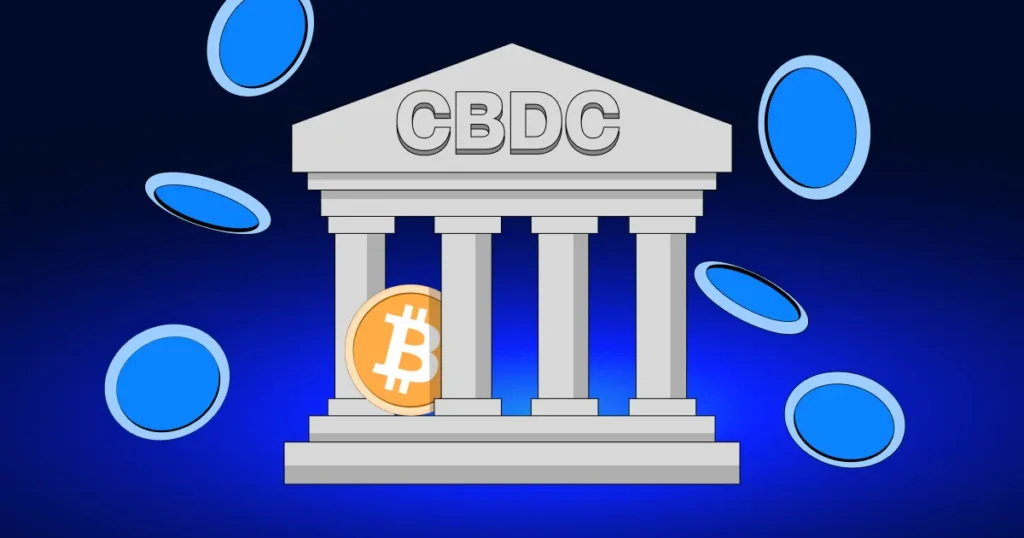
The Digital Currency Revolution
Over the last decade, the emergence of blockchain technology and the widespread adoption of decentralized cryptocurrencies like Bitcoin have challenged global financial systems. In response to this disruption, central banks worldwide have initiated research and pilot projects to introduce their own digital currencies, known as Central Bank Digital Currencies (CBDCs).
While both CBDCs and cryptocurrencies are digital forms of money, they differ fundamentally in their core purpose, underlying technology, and, most crucially, the role of central control. A CBDC is a digital form of a nation’s fiat currency, issued and backed by the central bank, whereas cryptocurrency is a decentralized digital asset often operating on a private, permissionless blockchain network.
In this extensive blog post, we will dissect the fundamental structures of CBDCs and cryptocurrencies, compare their characteristics, analyze their potential impact on the economy, and discuss the future co-existence of these two distinct types of digital currencies.
Part 1: Core Definitions and Objectives
To delineate the two, it is crucial to understand their primary definitions and the objectives they are designed to achieve.
1.1. Cryptocurrency
- Definition: A cryptocurrency is a decentralized digital or virtual currency that uses cryptography to secure transactions. It typically operates on a Distributed Ledger Technology (DLT) like a blockchain.
- Objective: To create an alternative financial system free from traditional, central control (a “trustless” system). It aims to provide financial freedom, enhanced privacy, and facilitate peer-to-peer (P2P) transactions without intermediaries.
- Examples: Bitcoin (BTC), Ethereum (ETH).
1.2. Central Bank Digital Currency (CBDC)
- Definition: A CBDC is the digital form of a country’s fiat currency, directly issued, regulated, and backed by its central bank. It is set to function as a legal tender of the nation.
- Objective: To ensure a safe, fast, and efficient digital payment system, maintain financial stability, and allow the central bank to retain control over the money supply, particularly as the use of physical cash declines.
- Examples: China’s Digital Yuan (e-CNY), the proposed Digital Euro by the European Central Bank, India’s Digital Rupee (e₹).
Part 2: Structural and Technological Comparison
The most critical distinctions between CBDCs and cryptocurrencies lie in their technological architecture and governance models.
| Feature | Cryptocurrency (e.g., Bitcoin, Ethereum) | Central Bank Digital Currency (CBDC) |
| Issuing Authority | Decentralized, no single central authority. | Centralized, directly issued and backed by the Central Bank. |
| Value Backing | Not backed by any physical asset; relies on market demand and supply. | Backed by the fiat currency, relying on the full faith and credit of the Central Bank. |
| Underlying Tech | Typically a Permissionless Public Blockchain (open access). | Typically a Permissioned DLT or centralized ledger (restricted access). |
| User Identity | Pseudonymous or anonymous, depending on the coin/protocol. | Identified and traceable, subject to KYC/AML regulations. |
| Stability | Highly volatile, with rapid price fluctuations. | Stable, pegged 1:1 to the fiat currency it represents. |
| Innovation | Open-source nature fosters rapid and continuous innovation (e.g., DeFi). | Slower innovation due to regulatory oversight and focus on stability. |

2.1. Centralized vs. Decentralized
This is the core difference. Cryptocurrencies run on decentralized networks where the validity of transactions is verified by a network of miners or stakers. CBDCs, conversely, fall entirely under the jurisdiction of the central bank, allowing them to exert control over monetary policy and maintain financial stability.
2.2. Blockchain and Ledger Access
Most major cryptocurrencies operate on public blockchains, where anyone can view transactions (though identities are obfuscated). For CBDCs, many central banks are exploring the use of a Permissioned Ledger. In this model, only the central bank and authorized financial institutions can access the transaction data, keeping privacy and security under central control.
Part 3: Economic and Societal Implications
The economic and social consequences of implementing these two types of digital currencies are markedly different.
3.1. CBDC Benefits and Impact
- Payment Efficiency: Facilitates faster, cheaper, and more efficient domestic and cross-border payments by removing layers of commercial bank intermediation.
- Monetary Policy Control: Allows the central bank to conduct monetary policy directly, such as distributing stimulus funds directly to citizen wallets or potentially implementing negative interest rates during emergencies.
- Financial Inclusion: Eases the delivery of financial services via digital wallets to the unbanked population who may lack access to traditional banking infrastructure.
3.2. Cryptocurrency Benefits and Impact
- Financial Sovereignty: Gives users complete control over their assets, without the risk of seizure or interference by any bank or government.
- Censorship Resistance: No single central authority or government can block or reverse a valid transaction, ensuring open access to finance.
- Platform for Innovation: Platforms like Ethereum provide a foundation for complex, innovative applications such as smart contracts and Decentralized Finance (DeFi).
3.3. Key Areas of Concern
- CBDC Concern: The most significant concern is Privacy. If the central bank can track every transaction, it could severely impact citizens’ financial autonomy and privacy rights, potentially leading to surveillance.
- Cryptocurrency Concern: The primary concerns are Volatility and the Lack of Regulation, which heightens the risk of illicit money flows and market instability.
Part 4: Future Coexistence and Competition
Experts hold varying opinions on whether CBDCs and cryptocurrencies will be competitors or complements in the future financial landscape.
4.1. Competition vs. Complementarity
- Competition: The introduction of CBDCs could directly challenge stablecoins and cryptocurrencies used for simple transactions, as a CBDC offers a stable, government-backed digital alternative without credit risk.
- Complementarity: Cryptocurrencies and DeFi applications will continue to act as experimental grounds for innovation. CBDCs could serve as a stable and regulated Settlement Layer upon which DeFi protocols could build their services. For example, a Decentralized Exchange (DEX) could offer liquidity pools based on CBDCs.
4.2. The Role of Regulatory Stance
The stance of regulatory bodies will largely dictate the future of these two currency types. If governments choose to integrate cryptocurrencies into the financial system through clear regulation, a form of cooperation could emerge. Conversely, if they seek to establish CBDCs as the sole legitimate digital currency, cryptocurrencies might be relegated to niche, high-risk investment vehicles.
4.3. Future User Preference
In the future, users are likely to choose their digital currency based on their needs:
- For Stability and Trust: They will use CBDCs (e.g., daily purchases, payroll).
- For Freedom and High-Risk Investment: They will use cryptocurrencies (e.g., international remittances, DeFi speculation).
Conclusion: The Hybrid Financial Future
Central Bank Digital Currencies (CBDCs) and cryptocurrencies represent two divergent paths in the digitalization of our financial system. The CBDC is an effort toward state-controlled stability and efficiency, while cryptocurrency is a public demand for freedom, decentralization, and innovation.
In the broader blockchain ecosystem, a CBDC can serve as a secure, regulated medium of exchange, supporting digital financial innovation without the inherent risks of commercial stablecoins. Meanwhile, cryptocurrencies will continue to drive innovation in areas like DeFi, NFTs, and the Metaverse.
Ultimately, the future financial system is unlikely to rely on a single currency type. Instead, it is expected to evolve into a two-tiered hybrid ecosystem, harmonizing the regulated stability of CBDCs with the decentralized innovation offered by cryptocurrencies.

nice