The Billion-Dollar Question
If you’ve spent any time online in the last few years, you’ve probably heard the term NFT—Non-Fungible Token. You’ve likely seen the headlines: someone paid $69 million for a piece of digital art, or a cartoon monkey JPEG sold for hundreds of thousands of dollars.
It all sounds a little crazy, right? Why would anyone pay real money for something that can be easily right-clicked, saved, and copied?
If you’ve been scratching your head, you’re not alone. The concept of an NFT is simple, yet revolutionary. It sits at the intersection of technology, finance, and art, and it’s fundamentally changing how we define and exchange ownership in the digital world.
This article is your plain-English guide. We’re going to break down exactly what an NFT is, how it works, why people spend fortunes on them, and why they matter far beyond just digital art.
Part 1: The Building Blocks – Fungible vs. Non-Fungible
To truly understand an NFT, we first need to understand the concept of “fungibility.”
1. Fungible Assets (Your Bank Notes)
Think about a standard US dollar bill, a Bitcoin, or a share of Apple stock. These are Fungible Assets.
- If you trade one $10 bill for another $10 bill, you still have the exact same value. They are interchangeable.
- If you trade one Bitcoin for another Bitcoin, the value and utility remain identical.
Fungibility means the asset can be swapped for an identical unit without losing any value or unique characteristics. They are identical copies.
2. Non-Fungible Assets (Your House or a Painting)
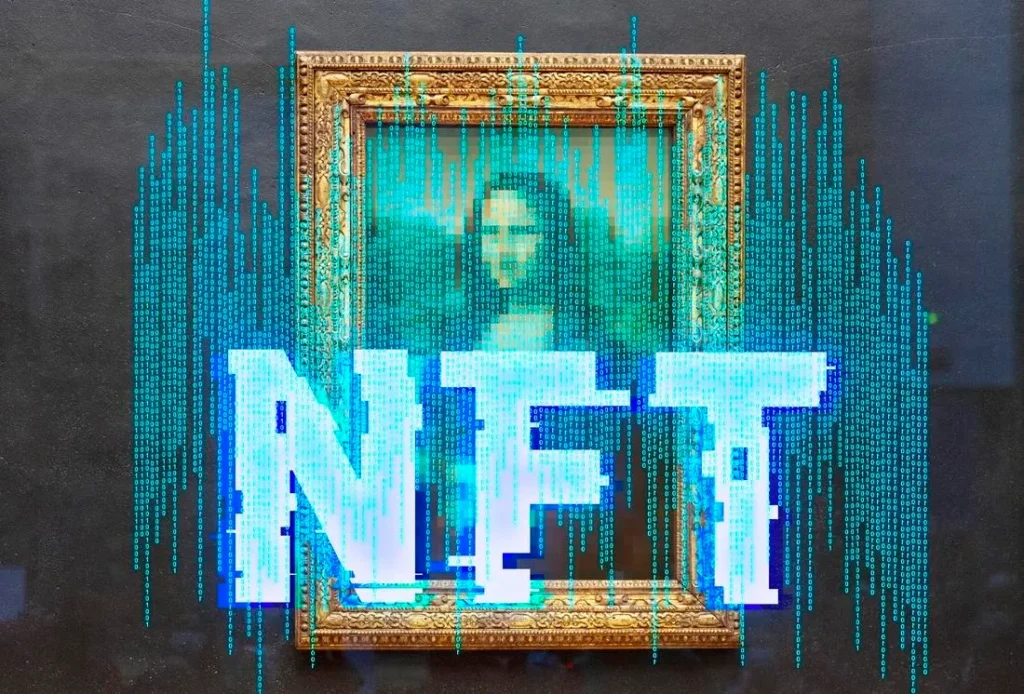
Now, think about your car, a unique piece of jewelry, or the original Mona Lisa painting. These are Non-Fungible Assets.
- You cannot swap your car for a different car and have the “same thing.” They have different mileage, history, and VIN numbers.
- The original Mona Lisa cannot be swapped for a poster print of the Mona Lisa. One is priceless, the other is cheap.
Non-fungibility means the asset is unique and cannot be replaced by anything else.
Part 3: The NFT Defined – What It Really Is
An NFT, or Non-Fungible Token, is simply a digital certificate of authenticity and ownership that lives on a blockchain (most often the Ethereum blockchain).
An NFT is NOT the digital item itself; it is the receipt for the digital item.
1. What the NFT Token Holds
The actual NFT is a piece of code that contains three critical things:
- Unique Identifier: A token ID that proves this specific NFT is one-of-a-kind.
- Owner’s Address: The digital wallet address of the person who currently owns it.
- Metadata Link: A secure link (usually IPFS) that points to the actual digital asset—whether that’s a JPEG image, a video clip, a music file, or a piece of land in a metaverse game.
2. The Blockchain’s Role in Proving Ownership
This is why the “right-click, save” argument misses the point. You can save a copy of the Mona Lisa, but you don’t own the original. Similarly, anyone can download the JPEG of a famous NFT, but only one person truly owns the NFT certificate recorded on the public, immutable blockchain.
The blockchain validates two things:
- Authenticity: It proves the item was minted (created) by the original artist or project.
- Providence: It provides a transparent, unbroken history of every owner the NFT has ever had.
Part 4: Why People Spend Millions on Digital JPEGs
The high prices are driven by three core factors: Scarcity, Community, and Utility.
1. Digital Scarcity and Collectibility
Humans naturally value things that are rare. For the first time in history, NFTs allow creators to enforce digital scarcity.
- Pioneering Collections: Just like people collect rare baseball cards or first-edition comics, collectors want to own “CryptoPunks” or “Bored Ape Yacht Club” NFTs because they are part of a historically significant, fixed collection.
- The Originality Factor: Owning the original digital file is seen as the ultimate status symbol, similar to owning the original manuscript of a famous book.
2. Community and Status (The Social Club)
Many NFT projects are not just pieces of art; they are membership cards to an exclusive digital club.
- Exclusive Access: Owning an NFT from a popular collection grants you access to private Discord servers, real-world events, and networking opportunities with other holders.
- Identity and Status: Your NFT acts as your digital avatar and status symbol online. By displaying a high-value NFT as your profile picture, you signal wealth, taste, and affiliation within the crypto community.
3. Utility (Beyond the Image)
The future of NFTs lies in their utility—what they do, not just what they look like.
- Gaming: NFTs can represent weapons, armor, or unique characters that players truly own and can sell for real money.
- Ticketing: An NFT can be a concert ticket that is impossible to counterfeit and can be resold securely.
- Music Royalties: Artists can sell an NFT that gives the buyer a small stake in the future streaming royalties of a song.
- Token-Gated Content: Websites or services can be “gated,” allowing access only to users who hold a specific NFT in their wallet.
Conclusion: The Future of Digital Ownership
An NFT, in its simplest form, is a certificate of ownership for a unique digital asset, secured by the immutable power of the blockchain.
It’s more than just a fleeting trend of expensive digital art. It’s a powerful new technological tool that solves a fundamental problem of the internet: how to truly own a digital file.
NFTs are paving the way for a future where you can truly own the data you create, the items you earn in video games, and the digital identity you cultivate online. As the technology evolves, expect to see NFTs used everywhere—from securing your house deeds and medical records to transforming the music and film industries.
The digital revolution is here, and the NFT is the key to unlocking true ownership.