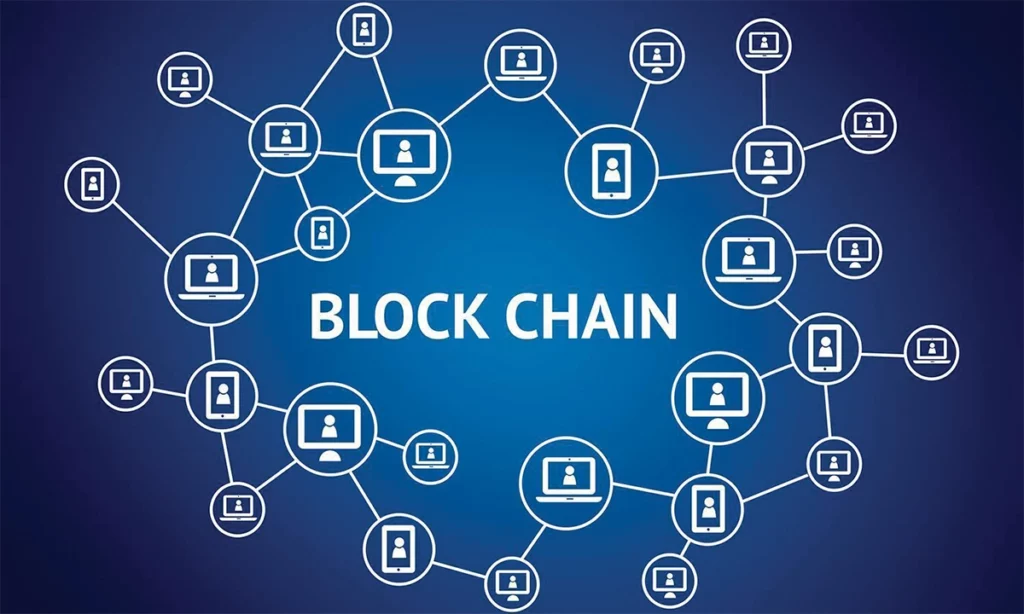
1. What is Blockchain Technology? ⛓️
Blockchain is a decentralized, distributed ledger technology (DLT). Essentially, it is a chain of data records (“blocks”) that are cryptographically linked together in a secure manner. The core characteristics that make Blockchain revolutionary are:
- Decentralization: No single central authority (like a bank or government) controls the data. Instead, the data is distributed across a network of participants.
- Transparency: All transactions recorded on the network are visible to all participants (though identities may remain pseudonymous).
- Immutability: Once data is recorded and added to the blockchain, it is nearly impossible to alter or delete, ensuring a tamper-proof record.
2. Applications of Blockchain Technology Across Industries 🌐
Blockchain technology is rapidly moving beyond cryptocurrencies to drive transformative changes across multiple sectors.
A. Finance and Banking 💰
The financial sector remains the primary domain of Blockchain, where it addresses issues of speed, cost, and trust:
- Cross-Border Payments: Blockchain enables faster and cheaper international money transfers compared to traditional banking systems, drastically reducing reliance on multiple intermediaries.
- Smart Contracts: These are self-executing contracts where the terms of the agreement are directly written into code. They automatically execute transactions when predefined conditions are met, cutting down on legal fees and processing time.
- Trade Finance: Blockchain digitizes and secures documents like Letters of Credit, reducing fraud and streamlining complex global trade processes.
- KYC and AML Compliance: It allows multiple financial institutions to securely and privately share verified customer identification data, making Know Your Customer (KYC) and Anti-Money Laundering (AML) checks faster and more efficient.
B. Supply Chain Management 📦
Supply chain management is one of the most compelling use cases for Blockchain due to its need for transparency and trust:
- Product Tracking and Traceability: Every step a product takes—from its origin, through manufacturing and shipping, to the final consumer—can be immutably recorded on a blockchain. This prevents counterfeiting and ensures authenticity.
- Example: In the food industry, consumers can scan a QR code to verify a product’s origin (the farm) and its entire journey, ensuring ethical and quality standards are met.
- Transparency and Auditing: It allows stakeholders to verify claims related to ethical sourcing, environmental compliance, and fair labor practices, thereby boosting consumer trust.
C. Healthcare 🩺
In healthcare, Blockchain can address critical issues related to data security, privacy, and management:
- Electronic Health Record (EHR) Management: Blockchain provides a secure, encrypted, and decentralized method to store patient health records. Patients maintain control over their data and can grant specific doctors or researchers access when necessary.
- Drug and Pharmaceutical Tracking: Tracking prescriptions and medications across the supply chain can prevent the circulation of counterfeit drugs. Every batch can be traced from the manufacturer to the pharmacy.
- Medical Research: Blockchain platforms can enable researchers to securely access vast amounts of anonymized clinical data while maintaining patient privacy, accelerating the discovery of new treatments.
3. Future Potential of Blockchain Technology ✨
The application of Blockchain is expected to expand dramatically in the coming years:
- Digital Identity: Blockchain is ideal for creating a decentralized and secure digital identity. It would give individuals full control over their personal data and significantly reduce the risk of identity theft when accessing online services.
- Voting Systems: Blockchain-based voting systems could be designed to be simultaneously transparent, secure, and highly resistant to tampering or fraud, bolstering democratic processes.
- Real Estate: Recording land ownership and property transactions on a blockchain would create a faster, more transparent, and immutable public ledger, cutting down on bureaucratic delays and fraud in title transfers.
- Metaverse and NFTs (Non-Fungible Tokens): Blockchain underpins the concept of the Metaverse by enabling true digital ownership (via NFTs) of virtual assets, land, and identity, thereby securing the foundation for the next generation of the internet.
Blockchain is a foundational technology that is poised to revolutionize the way value and trust are exchanged, much like the internet revolutionized the exchange of information. While still in the early stages of adoption across many industries, it is set to become an essential component of the global economy.